
When someone passes away, Lansing families often find themselves facing a legal process they’ve never heard of before — probate.
When someone passes away, life doesn’t pause. The bills still come. The grass keeps growing. Court letters full of legal-jargon, like “Letters of Authority” and “inventory due”, you’ve never seen before arrive in the mail.
There is all this “stuff” to manage amidst family dynamics and grief.
In Lansing, probate often feels like climbing a mountain you never chose to climb — with no map and no rest stops.
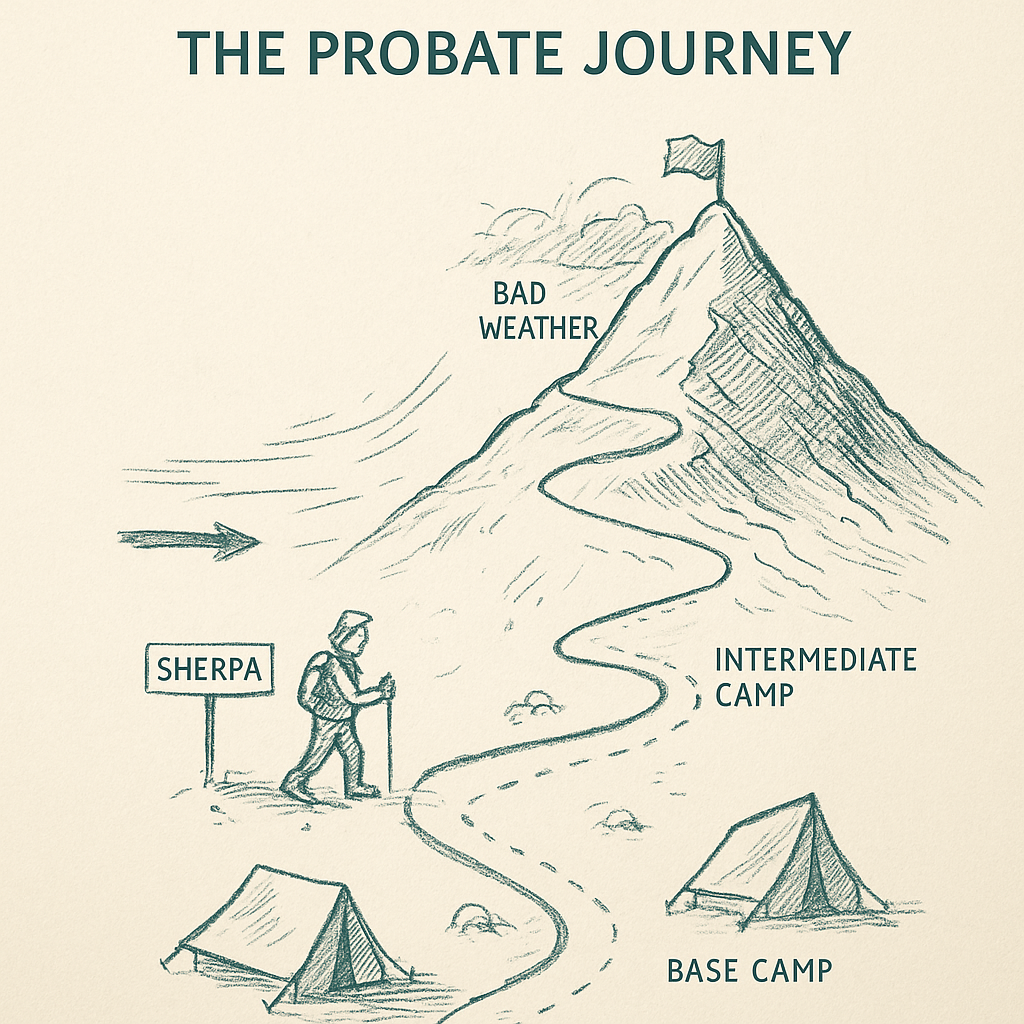
And yet, you’re expected to do it correctly, quickly, and without mistakes that could cost the estate time or money. It’s a lot of pressure.
Here in Lansing, probate follows the same general rules as the rest of Michigan, but with a few local twists.
Because our metro area overlaps both Ingham County and Eaton County, the process can vary slightly depending on where your loved one lived, where the home is located, or which court handles the filing.
This guide was created to help you find your footing locally — not as a legal textbook, but as a clear, plain-English overview of how probate works in Lansing and the surrounding area, what timelines to expect, and how property and real estate decisions often shape the process.
You’ll learn:
- How Lansing-area probate courts handle new filings and timelines
- What common challenges families face locally
- How real estate can speed up or slow down the process
- What next steps to take after probate begins
If you’re looking for help managing the real-estate side of probate, our Probate Real Estate Services page explains exactly how we help families across Michigan — including Lansing, Ingham, and Eaton Counties — sell estate property with clarity and care.
What Probate Means For Lansing Families
For most families in Lansing or managing probate in Lansing, probate begins often before grieving is complete. It might be triggered by a letter from the court, a call from the bank, or the awareness you need to do something with the family home.
At its core, probate is the court-supervised process that Michigan law uses to transfer someone’s property and assets, settle their debts, and close their estate.
In Michigan, probate always happens in the county where the person lived when they passed away.
Probate always happens in the county where the person lived when they passed away.
For the Lansing area, that usually means one of two courts:
- Ingham County Probate Court – 303 W. Kalamazoo St., Lansing, MI
- Eaton County Probate Court – 1045 Independence Blvd., Charlotte, MI

If your loved one lived in Lansing, Holt, Okemos, or Mason, you’ll likely file in Ingham County. If they lived in Grand Ledge, Delta Township, or Eaton Rapids, you’ll likely file in Eaton County.
While both follow Michigan’s probate laws, each court has its own rhythm and filing systems.
We also analyzed Ingham County probate court filings to better understand how probate administration actually works in practice — including how often different attorneys and law offices appear in estate cases. Read our 2025 Ingham county probate analysis.
How Long Does Probate Take In Lansing
Every estate follows the same basic map — petition, appointment, inventory, settlement, closing — but how quickly you travel that road depends on three things:
- Which county court handles the case: Ingham county averages 9 to 12 months; Eaton county often runs 6 to 10 months due to lighter caseloads.
- Complexity of the estate: Homes, multiple accounts, or family disputes can extend the timeline averages.
- Local real-estate market: If the home is wrapped up in probate AND it needs to be sold — perhaps to settle debt or a condition of the Will — then the probate process will, in-part, depend on the Lansing real estate market and your agent. When Lansing homes sell quickly (spring / early fall), estates close faster; slower markets extend the process.
In general, petitioning and appointment takes 3 to 6 weeks. Inventory and creditors takes a minimum of four months from public notice due to creditor notification laws. An executor works to manage assets and settle debts until a final accounting can be completed to close probate.
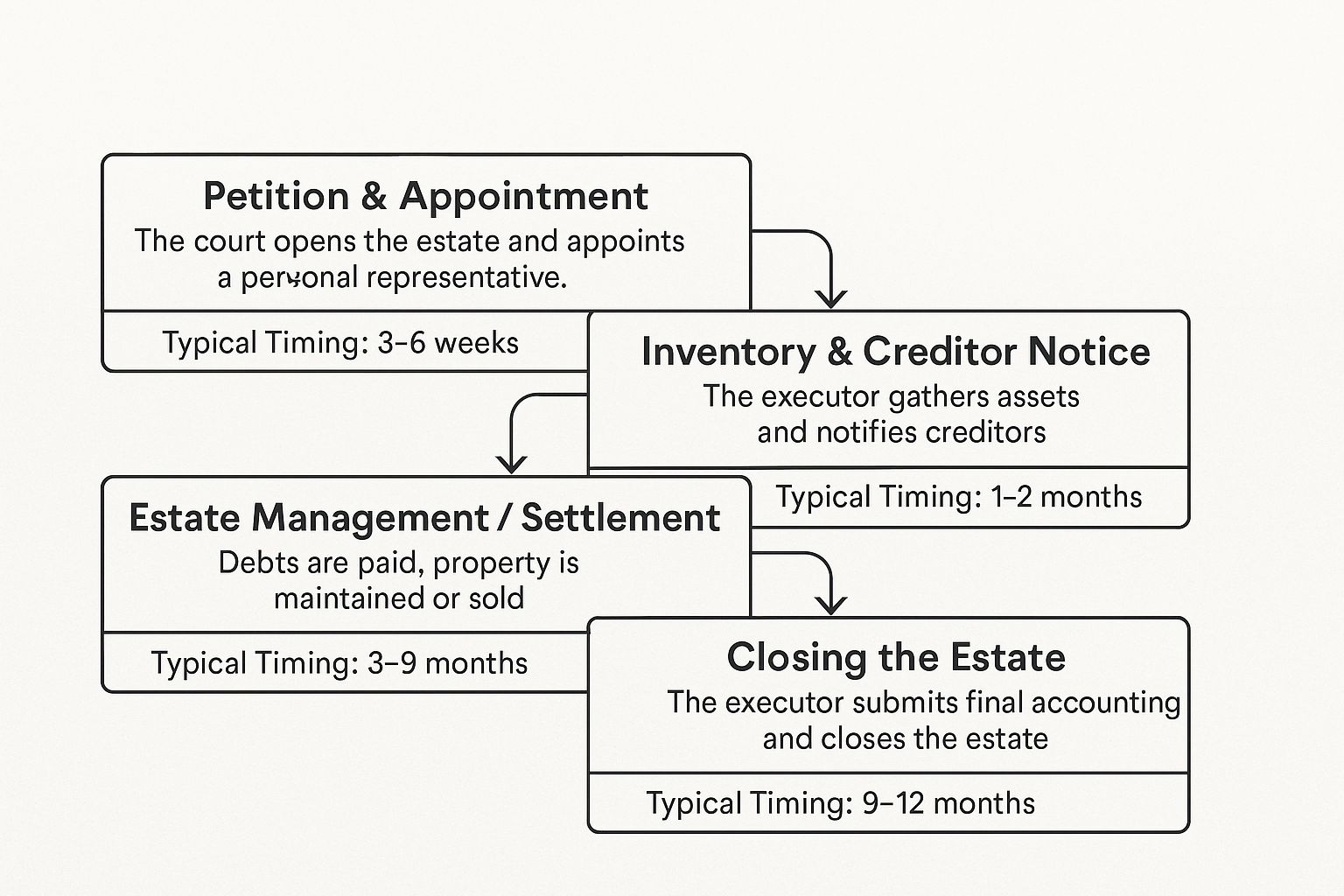
Lansing probate isn’t always linear. Most families work through several of these stages at once — paying bills while waiting on court forms, selling property while managing inventory, etc. Organization and clear communication often make the biggest difference.
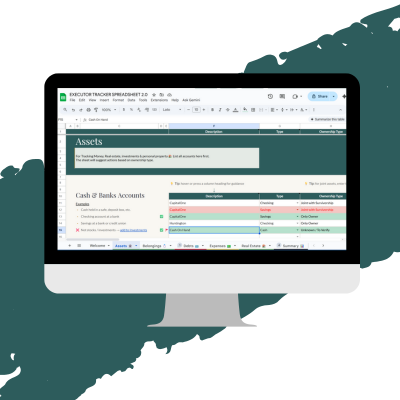
Stay Organized Settling an Estate
Use our Executor Tracker to log dates, payments, and court actions — it keeps everyone on track.
How Lansing Compares to the Michigan Average
While Lansing probate follows the same Michigan laws, local court volume and real-estate conditions shape the experience.
| Location | Typical Duration | Volume | Notes |
|---|---|---|---|
| Ingham County | 9–12 months | Higher | Structured, steady pace. |
| Eaton County | 6–10 months | Moderate | Quicker scheduling, lighter docket. |
| Statewide Average | 9–12 months | — | Varies by complexity and property involvement. |
For a broader statewide perspective, see How Long Does Probate Take in Michigan.
Probate Timeline Calculator
Managing Costs: Local vs. Out-of-State Executors
The total cost of probate in Lansing can also vary based on where the executor lives.
When family members live nearby, much of the estate management — checking mail, meeting service providers, maintaining the home — can be handled personally.
But when the executor lives out of state, those same tasks often need to be delegated or contracted locally.
- Hiring reliable help — from property managers to cleaning crews or maintenance services — adds to the estate’s monthly expenses, but it prevents larger losses from neglect or missed deadlines.
- Travel costs, overnight stays, and time off work can also quietly raise the total cost for distant executors.
In practical terms, a Lansing estate managed locally may spend a few hundred dollars per month on upkeep, while an out-of-state executor often sees that number double once coordination and travel are factored in.
Ultimately, organization and trusted local partnerships make the biggest difference, especially if you need to sell the home out of state.
Having a local agent or estate team overseeing the home keeps costs lower, timelines shorter, and the estate compliant with court and insurance requirements.
Where Do I Open Probate In Lansing (and Michigan)?
You must file probate in the county where the decedent lived at the time of death, not necessarily where they owned property.
For Lansing-area families:
- Ingham County Probate Court – 313 W. Kalamazoo St., Lansing MI 48933 | (517) 483-6300 | Website
- Eaton County Probate Court – 1045 Independence Blvd., Charlotte MI 48813 | (517) 543-7500 ext. 1436 | Website
To open probate, you may need to submit:
- Petition for probate form
- Death certificate
- Original will (if any)
- Filing fee

Once approved, the court issues Letters of Authority giving the executor legal power to act for the estate.
How Much Does Probate Cost in Lansing?
Probate costs in Lansing depend less on court fees and more on how long the estate stays open — because time directly affects attorney billing and property expenses.
While the filing fee is only a few hundred dollars, the real costs often come from the attorney’s time and the carrying costs of the home while the estate is being settled.
Attorney costs, property taxes, and maintenance expenses can be defined by local, market economies. In general, the Lansing area tends to be less expensive on all fronts compared to a city like Royal Oak or Novi.
| Category | Description | Typical Local Range |
|---|---|---|
| Attorney fees | Most Lansing probate attorneys bill hourly or as a percentage (often 2–5% of the estate’s value). Larger or contested estates can run higher. | $3,000–$8,000+ average total |
| Property taxes | Still owed each summer and winter while probate is open. Delays in sale can add multiple billing cycles. | Varies by property; $2,000–$6,000 per year typical |
| Home maintenance & insurance | Utilities, lawn care, and vacancy insurance often continue for months until closing. | $200–$600 per month |
Common Probate Challenges for Lansing Families
Even well-organized families run into challenges once probate begins — especially when the process stretches across Ingham and Eaton Counties or involves an inherited Lansing home.
The challenges we often see can limit estate proceeds and reduce the amount available for distribution to heirs and beneficiaries.
Here are some of the most common issues we see locally:
Different Heirs, Different Goals
It’s common for siblings to disagree on whether to sell, rent, or keep the family home.
In Lansing, that tension often grows when one heir lives nearby and others live out of state. Local coordination and clear documentation keep emotions from slowing the process.
Managing Vacant Property Through Michigan Weather
Empty homes in Lansing don’t stay neutral — they deteriorate fast.
Unheated properties risk frozen pipes, roof leaks, or vandalism during long winters.
Regular walk-throughs, lawn and snow service, and vacant-home insurance protect both the property’s value and your legal standing as executor.
Timing Around Court Filings and County Differences
Because Lansing’s metro area straddles two counties, it’s easy to get tripped up by differences in procedure.
Ingham County filings often move slower due to higher volume. Eaton County’s smaller docket can process faster — but only if paperwork is complete and signed correctly the first time.
Simple errors or missing forms can restart the process entirely.
Out-of-State Executors Handling Local Property
Many Lansing estates involve heirs who live in other states.
Coordinating repairs, cleanouts, and sales remotely can be stressful — especially when courts still require notarized originals.
Partnering with local professionals who can physically manage the property and keep communication flowing prevents long-distance delays. Examples include estate sale companies, Lansing junk removal companies, house cleaners, and more.
Emotional Fatigue and Decision Paralysis
Sorting through a loved one’s home — deciding what to sell, donate, or keep — can feel heavier than the paperwork itself.
We see many families pause here for months. Having a clear checklist and a neutral guide can turn emotional weight into practical progress.
When Real Estate Is Involved
In Lansing, real estate often acts like the quiet hinge of probate — small in appearance but it swings everything.
Homes in Colonial Village, REO Town, or Okemos may need updates before sale, while Holt, Mason, and Delta Township homes often move faster.
Because probate and housing markets overlap, coordination between the attorney, executor, and real-estate professional keeps the process efficient.
Selling options:
- Traditional listing
- As-is sale
- Investor / cash buyer in Lansing
Confirm with your attorney that your Letters of Authority permit signing contracts before listing.
Learn more in Selling a Home in Probate: How the Process Works in Michigan.
Do I Need a Probate Attorney in Lansing?
In most cases, yes — you’ll want an attorney.
Probate is a legal process, and certain steps — like filing petitions, publishing creditor notices, or closing the estate — should be handled by a licensed professional.
But that doesn’t mean the attorney has to handle everything.
Many families in Lansing, Ingham, and Eaton Counties work with attorneys for the legal filings while managing the day-to-day organization themselves — things like paying bills, maintaining the home, gathering documents, and communicating with heirs.
That shared approach keeps the process efficient and reduces overall costs.
The most cost-effective estates we see are those where families handle the paperwork and property organization — and let their attorney focus on the legal work they’re trained for.
This is where tools like our Executor Tracker Spreadsheet make a difference.
By keeping a clear record of expenses, property updates, and deadlines, you’ll minimize billable hours and keep your attorney’s time focused on what matters most — the legal side.
Finding Lansing Attorneys
Ingham County Bar Association
State Bar of Michigan Directory
Michigan Legal Help – Probate Section
We regularly collaborate with Lansing-area attorneys to coordinate real-estate steps, maintain homes, and communicate directly with their offices.
Can the court or judge help me with my case?
No. Michigan probate courts cannot give legal advice. Clerks may explain where to file or find forms, but they cannot tell you what to do. Judges also cannot advise privately outside hearings.
If you need guidance, consult a licensed Michigan probate attorney. Remember: The court processes paperwork — your attorney protects your interests.
Local Lansing Probate Resources
Settling an estate often requires connecting with a few key local offices and professionals. Below are trusted starting points to help you navigate the process in the Lansing area with confidence.
Probate Courts
Ingham County Probate Court: Handles most probate and estate cases for the Lansing area. Address: 313 W. Kalamazoo St., Lansing, MI 48933. Phone: (517) 483-6300
You can find court forms, filing instructions, and contact details for probate staff who can guide you through next steps.
If the decedent lived in a neighboring county, check:
Eaton County Probate Court — Visit Website
Clinton County Probate Court — Visit Website
Real Estate & Property Records
Ingham County Register of Deeds: Where you can locate property ownership records, liens, or deeds for inherited property. Address: 341 S. Jefferson St., Mason, MI 48854; Phone: (517) 676-7216
City of Lansing Assessor’s Office: For property tax status, valuation, or homestead information.
Funeral, Tax & Support Services
Michigan Department of Health & Human Services – Vital Records: To request death certificates and official documents needed for probate.
IRS Estate Tax: For information on final tax returns and estate filings.
Local Guidance: If you’re serving as an executor or personal representative, our free executor kit.
Frequently Asked Questions
How long does probate take in Lansing?
Usually 9–12 months depending on county and estate complexity.
Can I sell property before probate is complete?
Yes, once you have Letters of Authority and court approval.
Do I need a local attorney?
Yes — courts require certain filings by a licensed Michigan attorney.
What if I live out of state?
You can still serve as executor; remote coordination is common.
What does probate cost?
Expect 2–5% of estate value in combined fees.
Take the Next Step
You now understand how probate works in Lansing — how long it takes, where to file, and who can help.
If you’re ready to move from information to action and get a home sold in probate, view our probate services and see how we help families sell probate homes with care, compliance, and confidence.
When you’re ready, we’re here to help you take the next step — calmly, locally, and confidently.